By Justin Stum, LMFT | Licensed Counselor & Therapist
If you had told me a year ago that one of the most powerful tools for nervous system regulation I’d add to my personal wellness routine in St. George, Utah I would involve sitting in near-freezing water at PLUNJ, I probably would have smiled and said maybe sometime I’ll try it but wouldn’t be a regular. But here I am, seeing clients on the daily at my practice and cold plunging in the mornings has genuinely become one of the most impactful things I do for my own mental and emotional balance.
I do it on a weekly basis now (sometimes twice a week), and I notice the difference when I miss it. Less mental clarity, more baseline tension, and a slight increase in mental buzz. The research backs up what I feel, and I want to break that down for you here because this is not just a wellness trend. There is serious science behind it.
What Happens to Your Nervous System in Cold Water
When you step into a cold plunge, your body immediately activates the sympathetic nervous system. Your heart rate spikes, your breathing gets sharp, and a surge of norepinephrine and adrenaline floods your system. That initial shock is the point. You are, in the language of neuroscientist Dr. Andrew Huberman, creating what he calls “eustress,” a form of positive stress that builds resilience in the brain and body.
In his widely followed Huberman Lab podcast episode on deliberate cold exposure, Huberman explains that cold immersion triggers a significant and lasting increase in dopamine, the neurochemical most associated with motivation, focus, and mood regulation. This is not a short spike like you get from a sugary snack. Research he cites shows dopamine levels remaining elevated for hours after cold exposure. For people managing anxiety, low mood, chronic stress, or the lingering effects of trauma, that kind of sustained neurochemical shift matters.
The key insight from Huberman’s work is that you are not just tolerating discomfort in the cold water. You are training your nervous system to stay regulated under stress. The mental practice of remaining calm and focused while your body is screaming at you to get out? That capacity transfers directly into daily life.
The Sauna-Cold Plunge Cycle and Why It Works So Well
Here is where it gets even more interesting. The real power is not just the cold in isolation. It is the contrast therapy cycle: sauna, cold plunge, rest, repeat.
Dr. Susanna Søberg, a Danish metabolic scientist and researcher at the University of Copenhagen, has spent years studying what happens to the body and brain through this kind of temperature cycling. She appeared on the Huberman Lab podcast to discuss her findings, and one of her core principles has become widely known as “The Søberg Principle,” which is the idea that you should always end on cold to maximize the metabolic and neurochemical benefits. The cold forces your body to work to reheat itself, prolonging the release of beneficial neurotransmitters in the brain. She talked to Huberman too in this podcast, super deep dive into the science of cold plunging.
In her book “Winter Swimming: The Nordic Way Towards a Healthier and Happier Life,” Søberg documents how regular cold water immersion is connected to meaningful improvements in mood, reduced symptoms of depression and anxiety, and a greater sense of overall wellbeing. Her research on winter swimmers in Scandinavia shows increases in noradrenaline and beta-endorphins, essentially the brain’s own stress-buffering and happiness chemicals, with particular promise for people carrying unresolved trauma in the body.
The sauna side of the equation matters too. Heat exposure promotes relaxation of the muscles and nervous system, reduces cortisol, and encourages the release of serotonin. When you cycle between the two, you are putting your autonomic nervous system through a workout, pushing it between sympathetic activation and parasympathetic recovery. Over time, that builds a more flexible, resilient nervous system that handles everyday stress with greater ease.
The Comfort Crisis Connection
I’m also almost finished reading Michael Easter’s book “The Comfort Crisis”, it’s about how our modern lives have become so insulated from discomfort that we have inadvertently weakened ourselves, physically and mentally. He draws on the concept of hormesis, the idea that small, controlled doses of stress make us stronger. Cold exposure fits that model precisely and it’s doing that for me.
The main idea in the book is that the rising rates of anxiety, depression, and a general sense of purposelessness in modern life are partly driven by how rarely we challenge ourselves. We are temperature-controlled, overfed, and understressed in the ways that actually build psychological grit. Deliberate cold exposure is one of the most accessible ways to reintroduce that kind of healthy stress into your daily routine.
Trying It for Yourself in St. George, Utah
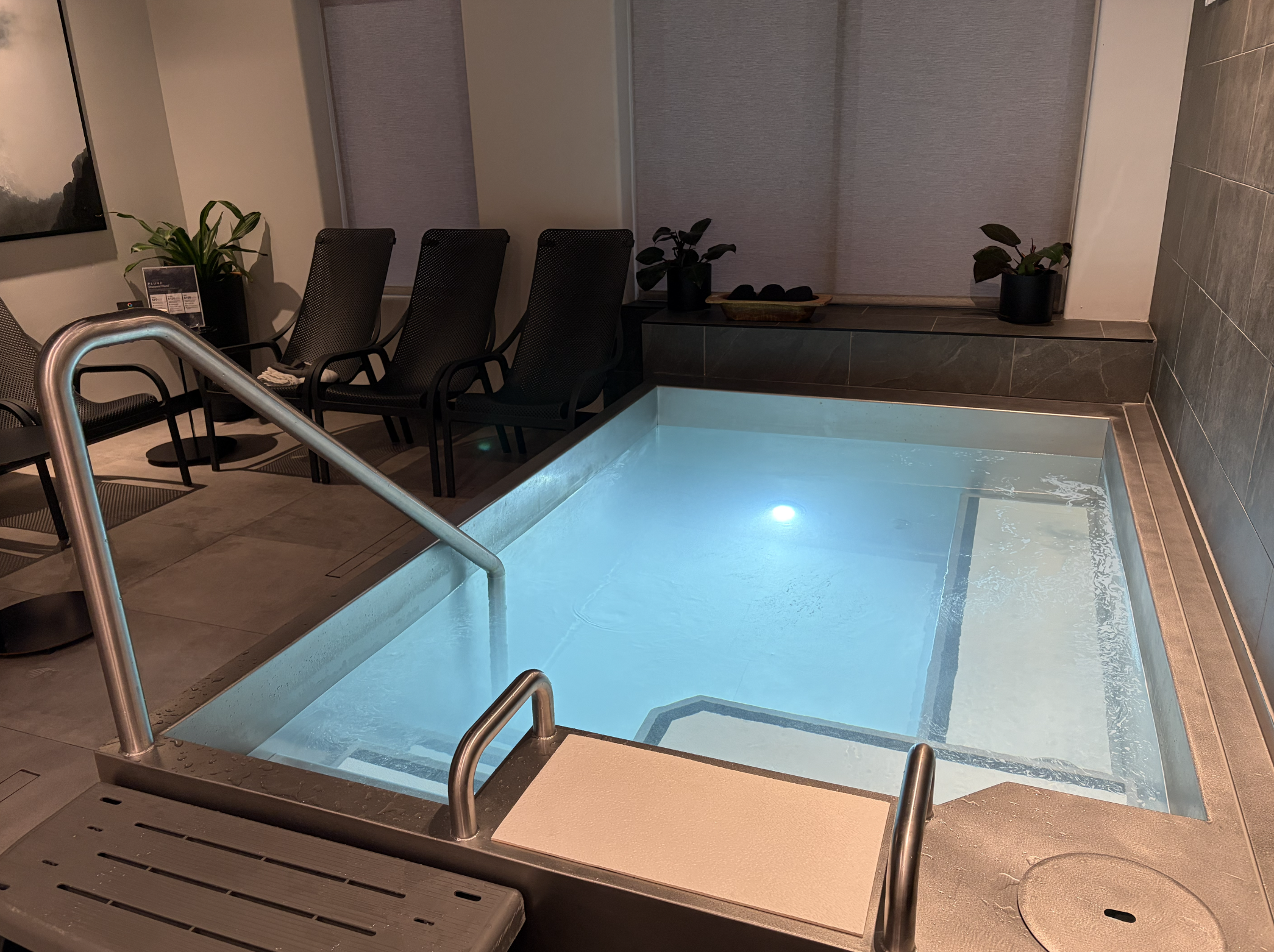
If you are in the St. George, Utah area and want to experience this for yourself, I genuinely recommend checking out PLUNJ. They are a Nordic-style bathhouse offering exactly the contrast therapy protocol I have been describing: sauna, cold plunge, rest, repeat. Sessions run 60 minutes, the space is clean and welcoming, and their staff guide you through the process whether you are a first-timer or a regular. Two of their staff, Jess and Tasia, are super nice and offer you hot tea and electrolytes during your sessions which I found really helpful. It is the kind of place that makes this practice accessible without needing any equipment at home.
The cold plunge pool sits around 50 degrees. The sauna runs about 190+ degrees or so. That contrast is what activates the full nervous system regulation cycle we have been talking about.
A Final Thought
As a therapist, I spend a lot of time talking with people about ways to regulate their nervous systems, process trauma, tolerate distress, and build emotional resilience. Cold plunging hits all three of those targets in a single session. The discomfort is real, but brief. The payoff, in terms of mood, clarity, and a quieter baseline anxiety level, is genuinely worth it.
Start small. Sixty seconds in cold water is enough to get some benefits if you are new to it. Work up gradually. And notice what happens in the hours after. For me, it has become a non-negotiable part of how I take care of my own mental health.
About the author: Justin Stum, LMFT, is the clinical director and owner at Elevated Counseling & Wellness in St. George, Utah. He’s been working for over 20 years working with couples, individuals, and families navigating relationship distress, trauma, betrayal, addiction, marriages, and life transitions. He and his team of therapists are trained in multiple modalities and can support you. To learn more or schedule an appointment, visit www.elevatedcw.com.