By Justin Stum, LMFT | Licensed Counselor & Therapist
If you are searching for a help in St. George, Utah you are not alone. Trauma bonding is one of the most painful and confusing relationship experiences a person can go through, and it is far more common than most people realize. Whether you are currently in a difficult relationship, recently out of one, or still carrying wounds from years ago, trauma-informed therapy and counseling in St. George, Utah can help you understand what happened and begin genuine healing.
What Is Trauma Bonding?
Trauma bonding is a psychological and neurological response that develops when a person forms a deep emotional attachment to someone who is also causing them harm. It is not a sign of weakness. It is not a character flaw. It is what happens when the human brain’s attachment system gets exploited by a cycle of intermittent reward and harm that creates a bond that feels almost impossible to break.
Dr. Patrick Carnes, widely regarded as the pioneering voice in betrayal trauma research, describes how this cycle triggers cortisol and dopamine responses in the brain that function similarly to addiction. This is one of the most important things trauma help can offer someone who is stuck: the understanding that what they are experiencing is biological, not just emotional, and that couples therapy and individual counseling in St. George, Utah can address both dimensions of that experience.
The 7 Stages of Trauma Bonding
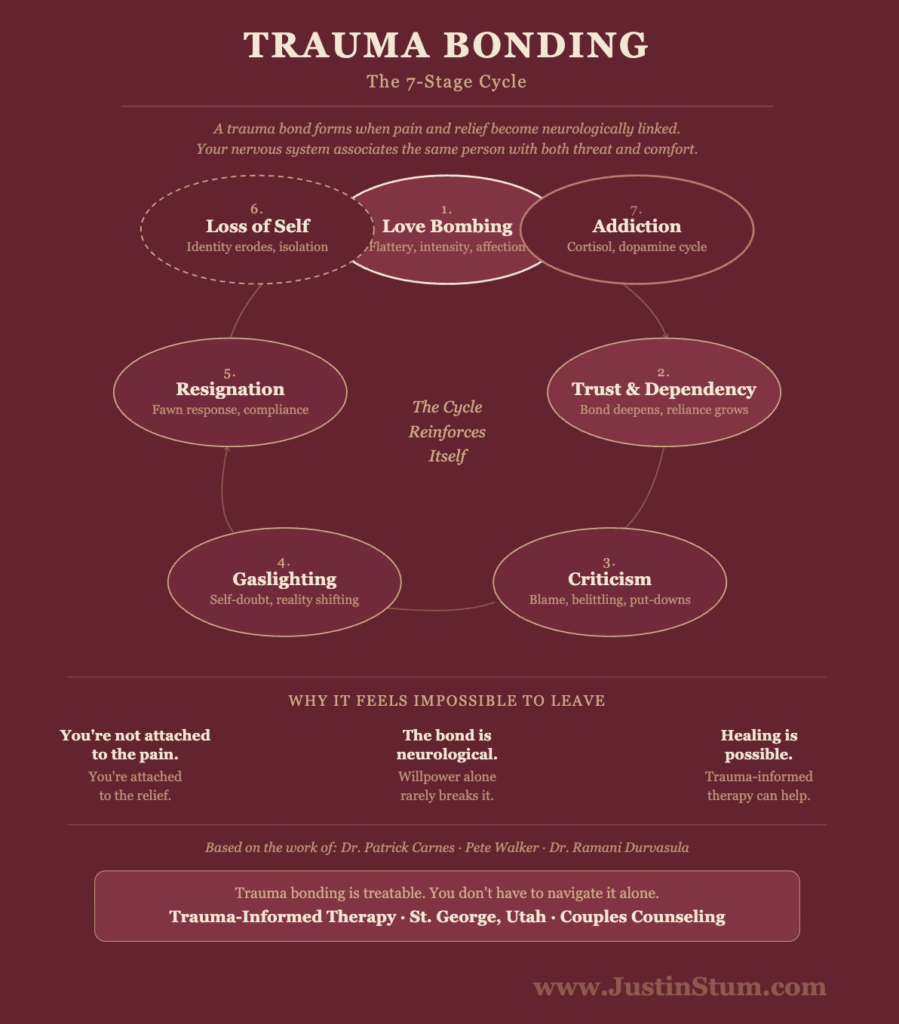
Trauma bonding typically follows a recognizable cycle. Most people who have lived through this dynamic can identify with some version of these seven stages:
1. Love Bombing The relationship begins with overwhelming flattery, affection, and attention. It feels extraordinary. This stage builds deep emotional trust quickly and sets the foundation for everything that follows.
2. Trust and Dependency The bond deepens. You begin to rely on this person emotionally, and they actively encourage that reliance. The connection feels genuine because in many ways it is, which is part of what makes trauma bonding so disorienting.
3. Criticism The dynamic begins to shift. Subtle put-downs, blame, and belittling comments gradually replace the warmth of the early stage. Many people in couples therapy in St. George, Utah describe this as the moment things started to feel off, though they often couldn’t name why at the time.
4. Gaslighting Self-doubt takes root. The other person begins minimizing your concerns, reframing events, and shifting blame in ways that leave you questioning your own memory and perception. This stage is central to how trauma bonding takes hold and is one of the key patterns that trauma-informed counseling helps survivors identify and recover from.
5. Resignation To manage the pain and uncertainty, you begin complying. You walk on eggshells. You try to rekindle the warmth from the beginning of the relationship. Trauma researcher and author Pete Walker calls this the fawn response, a survival strategy rooted in threat response, not weakness. Recognizing this pattern is a core part of trauma recovery work.
6. Loss of Self Confidence erodes steadily. Emotional and mental exhaustion become constant. Many people at this stage describe feeling like a shadow of who they used to be. Isolation increases. The inner critic grows relentless. This is one of the most important stages that trauma-informed therapy in St. George, Utah works to address and repair.
7. Addiction The body is now locked into a stress and relief cycle. As Dr. Carnes’ research explains, cortisol spikes during periods of conflict and tension, followed by dopamine surges during moments of reconciliation or affection. The brain begins to associate this person with both pain and relief, and that combination creates a dependency that is as real and as physical as any addiction.
Why Trauma Bonding Is So Hard to Break
Leaving a trauma bond is not simply an emotional decision. It can create massive amounts of anxiety and depression. It is a neurological and psychological one. Dr. Ramani Durvasula, one of the foremost clinical experts on narcissistic abuse recovery (you may have seen her on YouTube, she has a lot of content), emphasizes that survivors often remain stuck not because they lack strength or intelligence, but because the relationship has systematically eroded their ability to trust their own perceptions of reality.
The cognitive dissonance involved in loving someone who is hurting you creates a level of internal conflict that is genuinely exhausting. Add to that any early life experiences where love felt inconsistent or conditional, and the pattern can feel deeply familiar at a subconscious level, which makes it even harder to recognize and even harder to leave.
This is exactly why betrayal trauma and trauma bonding respond so well to professional therapy and counseling rather than willpower alone.
How Trauma-Informed Therapy in St. George Utah Can Help
Healing from trauma bonding is absolutely possible. For individuals and couples in St. George, Utah, trauma-informed therapy offers a structured and compassionate space to begin making sense of what happened and rebuilding from the inside out.
Effective trauma recovery work may include identifying which stages of the trauma bond you experienced, rebuilding trust in your own perceptions, processing grief and loss, developing healthy relationship patterns, and addressing the nervous system dysregulation that trauma bonding creates. For some clients, trauma-focused approaches such as EMDR therapy, which is available at our St. George, Utah counseling practice, can be especially effective in processing the deeper wounds that keep the bond alive even after the relationship has ended.
Couples therapy in St. George, Utah can also be a powerful part of the healing process in the right circumstances, particularly when both partners are genuinely committed to understanding the dynamic and rebuilding the relationship on healthier ground. Couples counseling works best in these situations when it is paired with individual trauma-informed therapy so that each person has dedicated space for their own healing.
You Deserve Support That Actually Understands This
If any part of this article resonated with you, that recognition is important. Trauma bonding is real, it is serious, and it is treatable. You do not have to keep trying to figure it out on your own.
If you are looking for a therapist in St. George, Utah who specializes in trauma bonding, betrayal trauma, and trauma recovery, we invite you to reach out. Our counseling practice offers trauma-informed therapy for individuals and couples who are ready to move from surviving to genuinely thriving. Healing begins with one honest conversation.
Contact us today to schedule a consultation with a trauma-informed therapist in St. George, Utah.
Frequently Asked Questions About Trauma Bonding Therapy
What is trauma bonding and how do I know if I am experiencing it? Trauma bonding is a psychological attachment that forms in relationships where cycles of harm and affection create a powerful emotional dependency. If you feel unable to leave a relationship that is hurting you, find yourself making excuses for a partner’s harmful behavior, or feel more anxious apart from them than with them, trauma-informed counseling in St. George, Utah can help you assess what you are experiencing.
Can couples therapy help with trauma bonding? In some cases, yes. Couples therapy in St. George, Utah can be helpful when both partners are willing to honestly examine the relationship dynamic. However, individual trauma-informed therapy is typically recommended first so that the person who has experienced the trauma bond has a safe and dedicated space for their own healing.
What therapy approaches work best for trauma bonding recovery? Trauma-informed therapy, EMDR therapy, and approaches rooted in understanding the nervous system’s response to trauma are among the most effective. Our St. George, Utah counseling practice uses evidence-based trauma recovery methods tailored to each individual client.
How long does trauma bonding recovery take? Recovery timelines vary depending on the length and intensity of the relationship, personal history, and other factors. Many clients begin to experience meaningful shifts within the first several sessions of trauma-informed therapy. Consistent counseling in St. George, Utah with a therapist who specializes in betrayal trauma makes a significant difference in outcomes.
References
Patrick Carnes, The Betrayal Bond: Breaking Free of Exploitive Relationships
Ramani Durvasula, It’s Not You: Identifying and Healing from Narcissistic People
Shahida Arabi, Breaking Trauma Bonds with Narcissists and Psychopaths
Sandra L. Brown, Women Who Love Psychopaths Pete Walker, Complex PTSD: From Surviving to Thriving
About the author: Justin Stum, LMFT, is the clinical director and owner at Elevated Counseling & Wellness in St. George, Utah. He’s been working for over two decades working with couples, individuals, and families navigating relationship distress, trauma, betrayal, mood disorders, addiction, and life transitions. He has a team of therapists trained in multiple modalities and will support you. To learn more or schedule a consultation, visit www.elevatedcw.com.