By Justin Stum, LMFT | Book Review
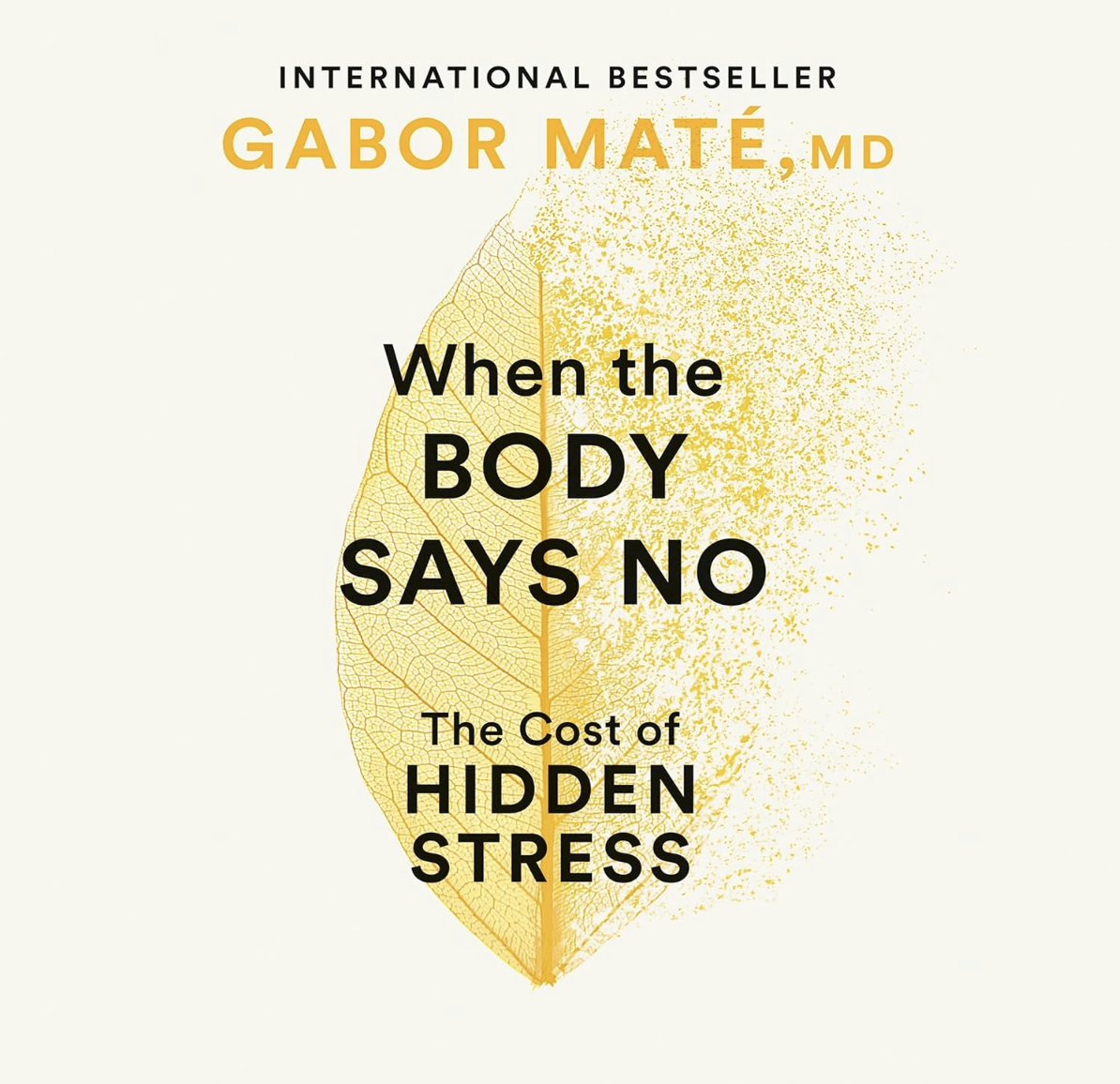
If you’ve ever said “I don’t feel stressed, I just keep getting sick,” you’ve already stumbled into the central mystery that Dr. Gabor Maté spends an entire book unpacking. When the Body Says No: The Hidden Cost of Stress is one of the most compelling books I’ve encountered in over two decades of working in the mental health field in St. George Utah. It reads like part medical memoir, part neuroscience primer, and part urgent call to action, and it has the rare quality of being both deeply personal and rigorously research-backed, double win if you ask me.
Growing Up: Where It Starts
Dr. Maté, a Canadian physician with decades of experience in family medicine and palliative care, argues something that many people in therapy have long suspected: the body and the mind are not separate systems. They are one. And when the emotional self is chronically silenced, suppressed, or overridden, often rooted in early childhood experiences and relational patterns, the body eventually picks up the tab.
Maté suggests that repression, often rooted in a childhood where a child’s emotional needs weren’t adequately met or acknowledged, disrupts the regular functioning of the hypothalamic-pituitary-adrenal axis, the pathway that regulates cortisol and other key hormones, leading to chronic stress on the body’s systems, which can ultimately contribute to illness or disease.
What makes this book particularly important for anyone navigating anxiety, depression, trauma, or troubled relationships is Maté’s core claim: it’s often those who believe themselves to be the least emotionally troubled who are at highest risk, because suppression of negative emotions is our worst enemy. The people who look fine on the outside, the caretakers, the pleasers, the high-functioning perfectionists, are frequently carrying the heaviest hidden load.
The Trauma Connection
For anyone working through or recovering from trauma, this book offers a framework that validates what so many people already feel in their bones: something happened to me, and my body never forgot. The biology of potential illness arises early in life. The brain’s stress-response mechanisms are programmed by experiences beginning in infancy, and so are the implicit, unconscious memories that govern our attitudes and behaviors toward ourselves, others, and the world.
This is the heart of trauma-informed care. Maté isn’t assigning blame to parents or caregivers. He’s compassionately tracing how early relational environments shape our nervous systems for better or worse, and how those patterns ripple forward into adulthood, relationships, and physical health.
One of the most striking quotes in the entire book cuts right to this:
“When we have been prevented from learning how to say no, our bodies may end up saying it for us.” — Gabor Maté
What This Means for Relationships and Marriage
Much of what Maté describes has direct implications for how people show up, or don’t, in intimate relationships. The traits that place people at highest risk, compulsive self-sacrifice, difficulty expressing anger, chronic people-pleasing, and the inability to set limits, are also the traits that quietly erode marriages and partnerships over time.
Connection is vital to healing. Study after study concludes that people without social contact, the lonely ones, are at greatest risk for illness. People who enjoy genuine emotional support face a better prognosis, no matter what the disease.
What that means in plain language: our relationships can either protect or degrade our health. The quality of our emotional connections isn’t just a personal preference. It’s a biological necessity. For couples doing the hard work of rebuilding trust, improving communication, or healing after betrayal, this book provides a compelling scientific argument for why emotional intimacy matters far beyond the relational.
The Anxiety and Depression Angle
Maté’s work also resonates deeply with anyone living with anxiety and depression. He describes how chronic stress, much of it subconscious, keeps the body locked in a low-grade state of threat response. The person who can’t identify why they’re always braced for something bad isn’t catastrophizing. Their nervous system has simply learned from experience to stay on guard.
His observation about the myth of positive thinking is particularly worth sitting with:
“We have seen in study after study that compulsive positive thinkers are more likely to develop disease and less likely to survive. Genuine positive thinking, or more deeply, positive being, empowers us to know that we have nothing to fear from truth.” — Gabor Maté
This is an important reframe for anyone who has been told to “think positive” as a coping strategy for depression or anxiety. Real healing doesn’t come from suppressing the hard stuff. It comes from learning to be present with it.
The Seven A’s of Healing
Maté doesn’t leave readers stranded in the problem. He closes the book with what he calls the Seven A’s of Healing: Acceptance, Awareness, Anger (the healthy expression of it), Autonomy, Attachment, Assertion, and Affirmation. These aren’t quick fixes. They’re invitations toward a more authentic, self-aware way of living. For anyone in therapy, whether working on cognitive patterns, emotional regulation, relationship skills, or trauma reprocessing, Maté’s framework fits like a glove. It explains the why behind the work.
Key Takeaways
- Trauma lives in the body. Unresolved emotional pain doesn’t disappear. It migrates. Understanding this is foundational to healing.
- Chronic people-pleasing is a health risk. The inability to say no, often learned in childhood, carries long-term consequences for both physical and mental wellbeing.
- Relationships are medicine. Social connection and emotional support are not luxuries. They are physiologically protective.
- Depression and anxiety often have roots in suppression, not weakness. Naming and feeling emotions is part of recovery, not a detour from it.
- You can’t heal what you can’t feel. Authentic self-awareness, including acknowledging what was painful or missing in early life, is the entry point to lasting change.
My Recommendation
This book belongs on the nightstand of anyone navigating anxiety, depression, relationship struggles, chronic illness, or unresolved trauma. It’s not always a comfortable read. Maté has a way of describing patterns you may recognize in yourself or the people you love. But it’s one of the most honest and compassionate accounts of what it means to be human under pressure.
If you’re currently in therapy, bring it with you. If you’ve been thinking about starting, let this book be your reason. You can have a better life, you can begin again.
Get When the Body Says No on Amazon
About the author: Justin Stum, LMFT, is the clinical director and owner at Elevated Counseling & Wellness in St. George, Utah. He’s been working for over two decades working with individuals, couples, and families navigating relationship distress, trauma, betrayal, depression/anxiety, addiction, and life transitions. He and his team of therapists are trained in multiple modalities and will support you. To learn more or schedule an appointment, visit www.elevatedcw.com.